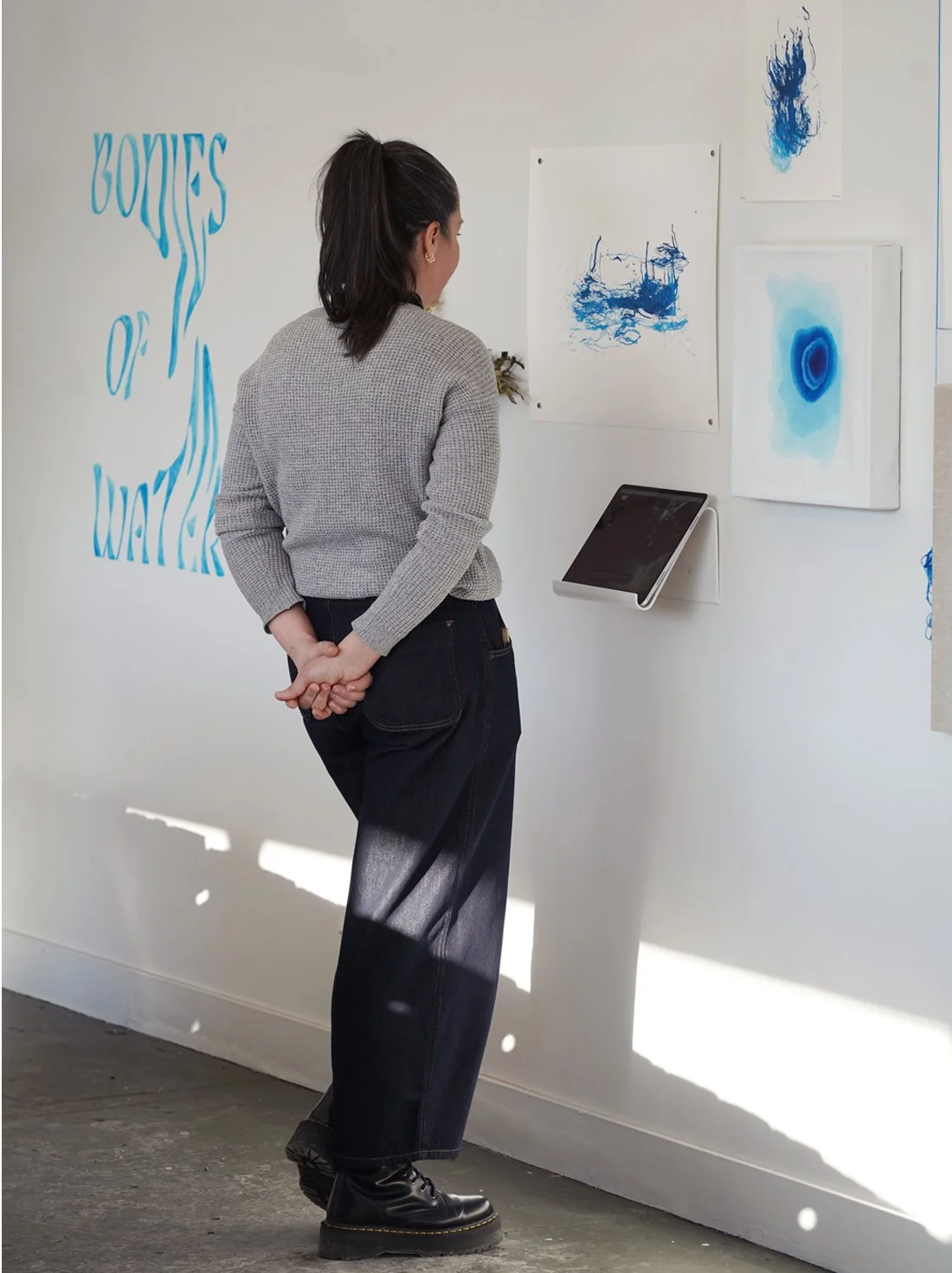
Bodies
Of Water
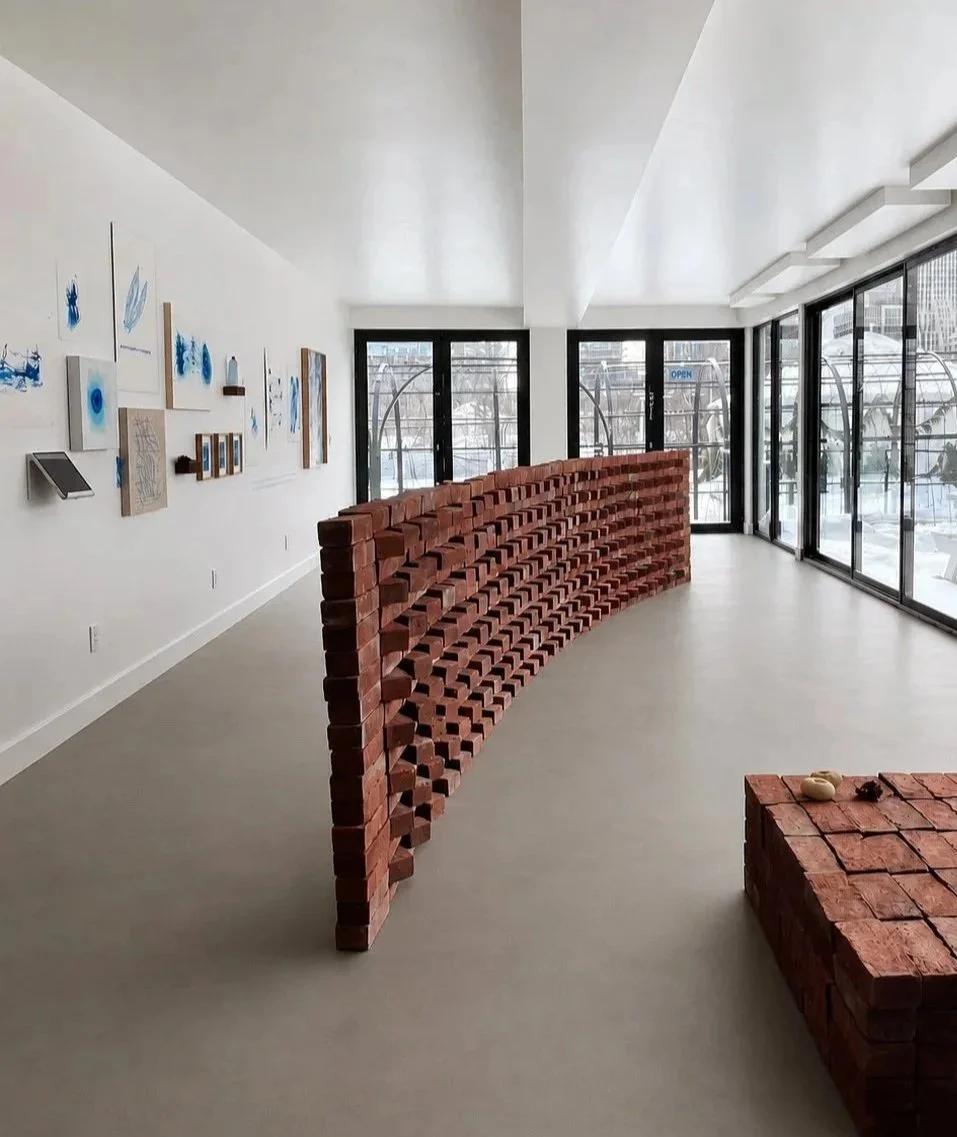
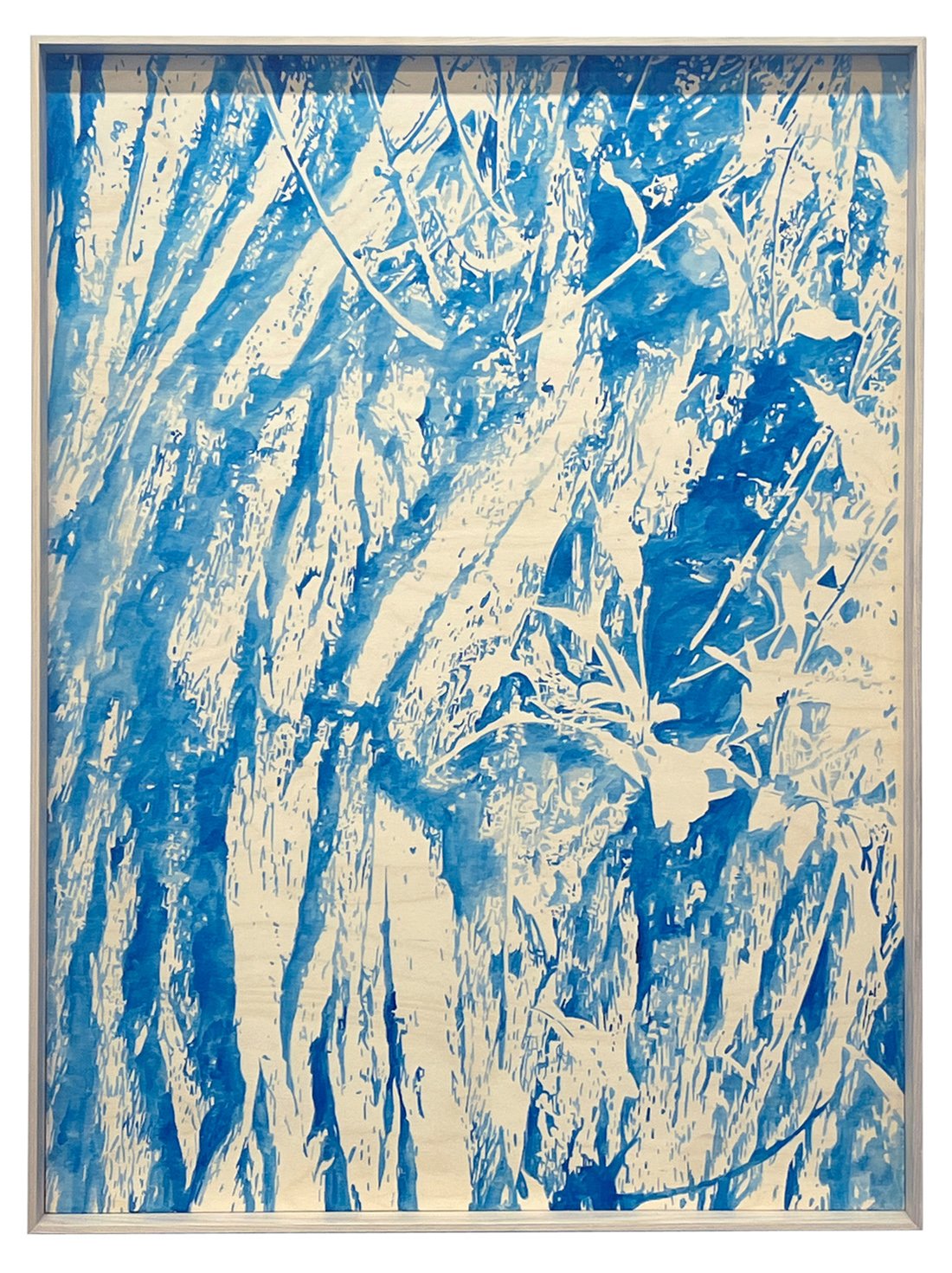
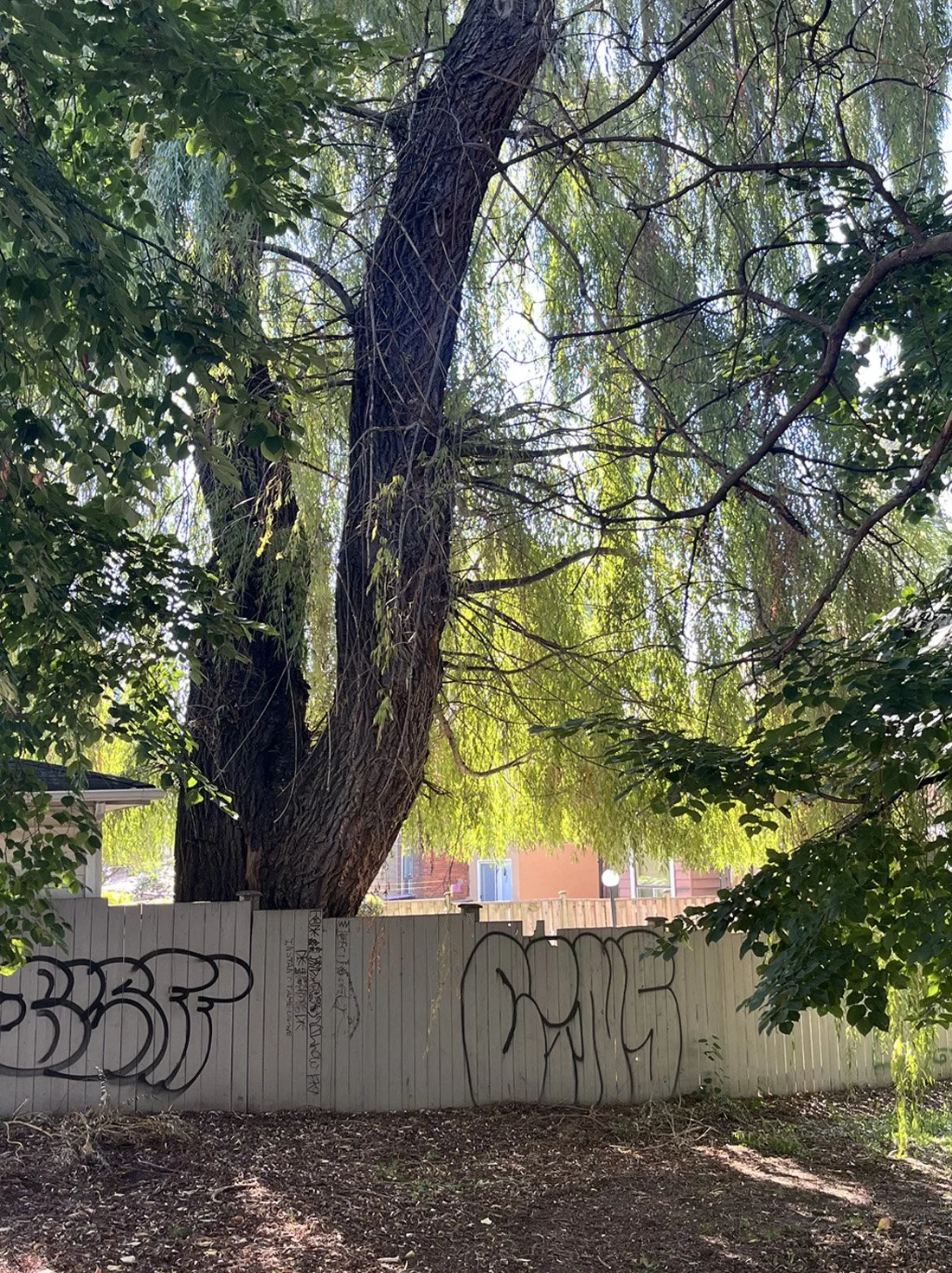
Here, the frost arrives late and grass peaks through the snow. Goldenrod draws attention to ground that has been unsettled. Horsetails, ferns, and mosses thrive where the soils never dry. Each summer storm that fills the streets is a signal from this watery underworld: you are standing in a floodplain. Straddling the high ground between the buried Garrison and Taddle Creeks, Bodies of Water invites you to convene with our heritage waterways beyond the diaphragms of maps and manhole covers. Through painting, stitching, harvesting, and stacking, the work asks: how might we read this 10,000-year geostory in the making, and how can we live in kinship with the rivers below?
Curated by: Amrit Phull, Lori Harrison
Exhibition Artists: Amrit Phull (brick sculptures), Lori Harrison (drawing, prints, painting)
Text: Amrit Phull
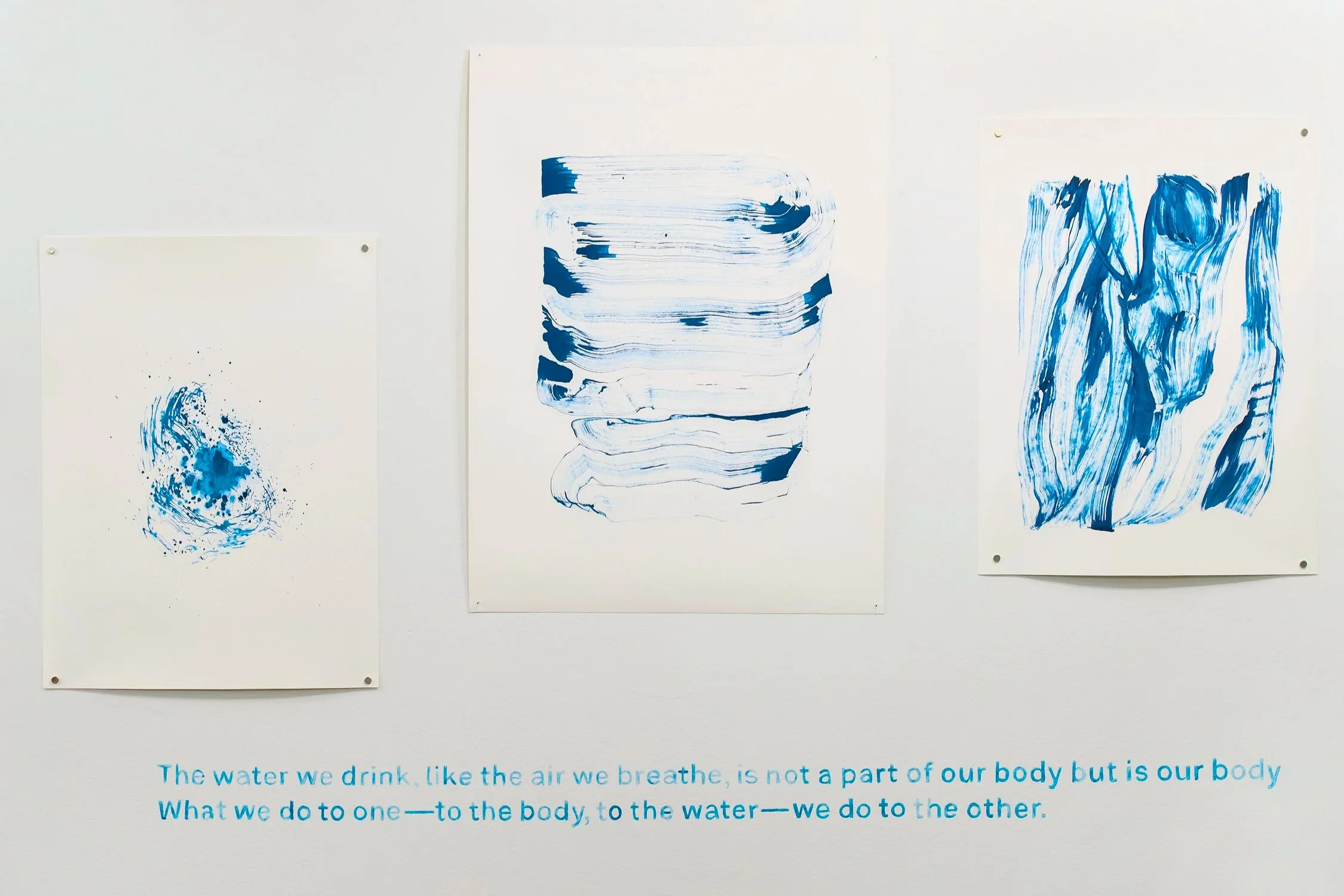
Beneath the articulated
surface of the cityscape is a pulse, ancient and constant.
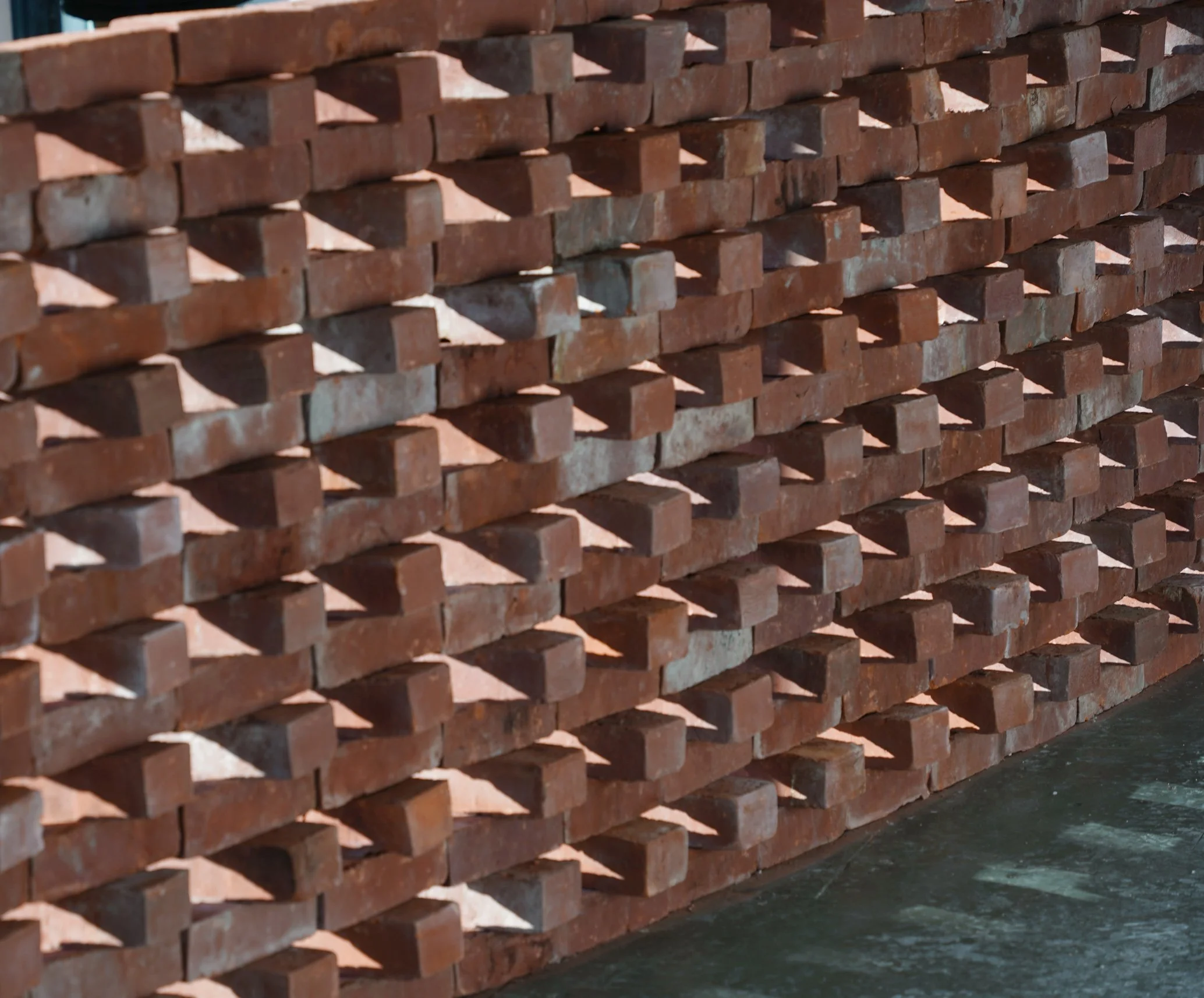
Toronto, like many settler cities, sits thinly atop an urban catacomb of sewers, entombing the waterways that once coursed freely into communion with the lake. Their movement over ten millennia laid a plenty of glacial clays, sands, and silts into the soils. When the waters were buried, this earthen inheritance would be fired into brick and stacked into buildings that now characterize the city streets.
In the project of city-building, rivers were levelled with cinder and ash, creeks silenced into culverts, and seasonal springs forced through pipes to flow in perpetuity. A story of material irony and alchemy, the waters’ gifts were used to facilitate its disappearance. But water is clever; she seeps through. The bodies of water below Toronto speak to us through omens, leaks, and disturbances.